FEEDER CABLE / BUYER HUB
ADSS Optical Cable for Aerial FTTH / Utility Projects — Specs Checklist & Project RFQ
ADSS (all-dielectric self-supporting) optical cable is aerial fiber that hangs on poles without a metallic messenger. FTTH and utility teams use it on existing routes when they need dielectric construction and a span-matched mechanical design. FIBOVO coordinates China-side supplier quotation from your project specs — not from catalogue stock claims.
Request project quotationReference buyer guide. Exact model, availability, documents and commercial terms are confirmed only in the quotation.
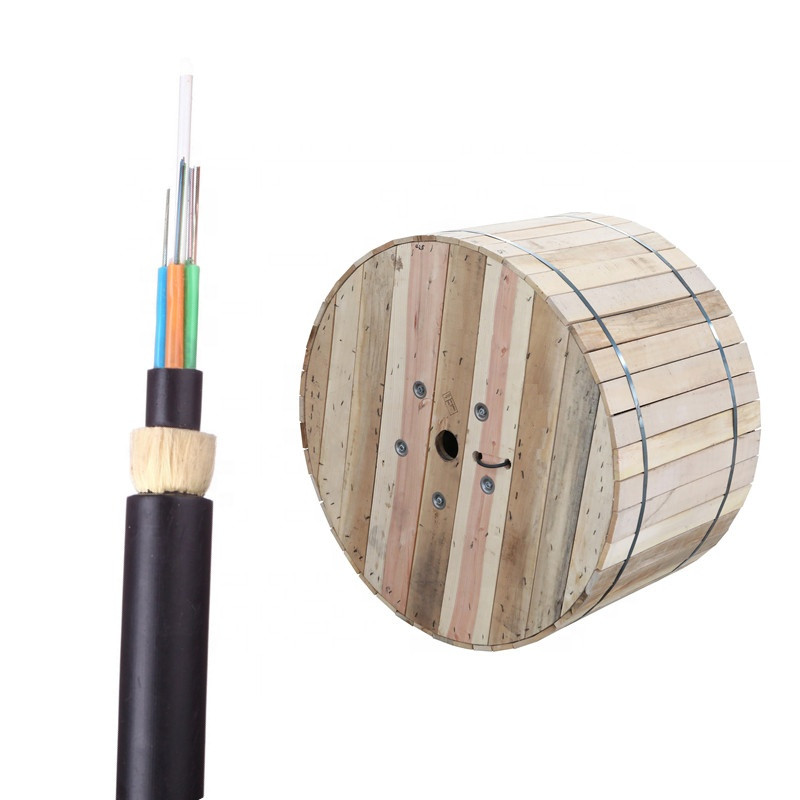
Include fiber count, max/ruling span, line voltage, jacket preference (if known), quantity (km), destination country, and any drum-length preference. We reply with a supplier-checked volume quotation for your project.
When to use ADSS (vs buried / OPGW / messenger cable)
Choose ADSS optical cable when the route is aerial, poles already exist, and you need a fully dielectric design — no metallic messenger, no intentional path to ground through the cable. It is common for FTTH feeder sections, utility communications overlays, and rural or suburban rebuilds where trenching is slow or blocked.
Retrofit on existing poles without outage
Many buyers specify ADSS because crews can add fiber on live distribution poles without waiting for a new shield-wire package. You still need span data, clearance rules and approved hardware; the point of ADSS is mechanical self-support plus dielectric construction, not “install without engineering.”
When OPGW is usually the better call
OPGW (optical ground wire) belongs on high-voltage lines where the cable also serves as the shield/ground wire. New HV shield-wire builds, tower hardware packages and electrical continuity requirements usually point to OPGW, not ADSS. Keep ADSS and OPGW on separate quotation lines so suppliers do not mix constructions or test documents. For a short configuration checklist that covers outdoor cable families, see also the outdoor / ADSS specification page.
Specs that change the ADSS optical cable quotation
Comparable offers need the same inputs. Missing span or jacket data is the most common reason quotations cannot be compared. Use the fields below as a buyer checklist; final selection always depends on route survey and loading data.
Fiber count & type
State fiber count and fiber type as examples of what you need, not as a claim of on-hand stock — for instance 24-fiber or 48-fiber G.652.D for many aerial feeder routes. If the design office has already locked G.657 for bend-sensitive sections, say so. FIBOVO will check matching supplier configurations against the RFQ, not against homepage photos.
Span: maximum span vs ruling span
Maximum span is the longest individual pole-to-pole distance on the route. Ruling span is the design span used for tension and sag calculations across a section. Suppliers size strength members and jackets from both. Industry examples such as 100 m, 200 m or 500 m spans appear in many catalogues; treat them as examples only and send your actual max and ruling spans in the RFQ.
Line voltage & jacket — PE vs AT
PE jackets are often discussed for lower electrical stress environments; AT (track-resistant) jackets are commonly considered near higher line voltages where dry-band tracking is a concern. This is rule-of-thumb language only. Final PE vs AT choice needs project voltage, pollution level and utility practice — send those facts rather than asking for “the standard jacket.”
Quantity, drum length, destination / Incoterms
List total kilometers, preferred drum lengths (or joint limits), destination country/port, and whether you want EXW, FOB or CIF comparison. Drum length changes packing, freight and joint planning; destination changes documentation and Incoterms. Do not expect a useful price without quantity and delivery basis.
Hardware travels with the cable
Suspension and tension (dead-end) fittings must match the finished cable diameter and the approved installation design. If you already know hardware types — preformed suspension sets, spiral vibration dampers, dead-end grips — include them in the same RFQ so the cable and fittings can be checked together. See also aerial installation hardware for the field list we use on project BOMs.
How to send an ADSS project RFQ to FIBOVO
- Fiber count and fiber type (example: 24F / 48F G.652.D).
- Maximum span and ruling span, plus any known wind/ice or temperature assumptions.
- Line voltage / electrical environment and PE vs AT preference if your utility already decided.
- Total quantity (km), preferred drum length, and joint limits.
- Destination country/port and preferred Incoterms basis.
- Hardware needs (suspension / dead-end) and cable diameter limits if known.
- Documents you need with the offer (cross-section, mechanical/optical data, packing list).
Submit through the project RFQ form on the homepage, or email / WhatsApp using the contacts already published on this site. Combine ADSS with passive ODN items in one brief when they belong to the same build — see product families and technical selection.
Related ODN materials for the same project
Aerial feeder cable rarely travels alone. The same RFQ can list:
- PLC optical splitter — ratio, package, polish.
- Fiber distribution box — ports, mounting, sealing.
- Splice closure — dome/inline, splice count, cable entries.
- FTTH drop cable — core class, profile, reel length.
Homepage photos remain reference families. Exact manufacturer, model, price and documents are checked per quotation — the same honesty rule stated in the site FAQ.
FAQ
What is ADSS optical cable and when is it used?
ADSS is all-dielectric self-supporting aerial fiber cable. It is used on utility or FTTH pole routes when you need optical capacity without a metallic messenger. Typical cases are retrofit on existing poles and dielectric feeder sections. It is not a substitute for OPGW on new HV shield-wire builds.
What span length do I need for ADSS cable?
Provide both maximum span and ruling span from the route design. Catalogue examples (such as 100 m / 200 m / 500 m) are not FIBOVO product grades. Span, wind/ice loading and temperature range drive strength-member and jacket selection; send those figures in the RFQ.
What information should I include in an ADSS cable RFQ?
Fiber count/type, max and ruling span, line voltage or electrical environment, PE vs AT preference if known, quantity in km, drum-length preference, destination/Incoterms, and hardware needs. Ask for cross-section and mechanical/optical data on the exact proposed model.
PE jacket or AT (track-resistant) jacket — which should I choose?
It depends on line voltage, pollution and utility practice. PE is often discussed for lower electrical stress; AT jackets are commonly considered where tracking risk is higher. Treat this as guidance only and state project voltage data in the RFQ so the supplier can propose a matching sheath.
ADSS vs OPGW — which cable for my project?
Use ADSS for dielectric aerial fiber on distribution/FTTH poles. Use OPGW when the cable must also act as optical ground wire on HV lines. Do not compare per-kilometer prices across the two constructions; keep them on separate quotation lines.
Can I order ADSS cable together with PLC splitters / FDB / splice closures in one RFQ?
Yes. Combine cable and passive ODN hardware in one project RFQ when they share the same build. List quantity and specification for each family so supplier checks stay aligned. Start from the homepage catalogue or the specification catalogue.
Do the photos on the catalog confirm a specific supplier model or stock?
No. Catalog photos are reference families from public product imagery. They do not confirm a supplier SKU, warehouse quantity or certificate set. Exact model, availability and documents are verified only in the quotation.
How do I request a quotation from FIBOVO?
Use the project RFQ form with company, project country and business email, plus the ADSS checklist above. Or email [email protected] / [email protected] / [email protected] / [email protected] / [email protected], or WhatsApp +86 197 0727 6810 — the same contacts published on llms.txt.
Ready for a supplier-checked ADSS quotation?
Send fiber count, max/ruling span, line voltage, jacket preference (if known), quantity (km), destination country, and any drum-length preference. We reply with a supplier-checked volume quotation for your project.
Request quotation via project RFQ